Small Boat Marine First Aid Kits

boating first aid kit

Small Boat First Aid Kit

Every boat should have a properly stocked First Aid Kit that is appropriate for the boating activities that you do.  Factors include; the area you are boating in (how far or how long will it take medical help to arrive), how many crew on board, the first aid skills of you and your crew and the type of activities you do.

I think every boater that is close to help should have at least 30 minutes of First Aid Skills.  Boaters that are in more remote areas should have higher skills and a more complete First Aid Kit.  What do I mean by 30 minutes of skill?  The ability to treat and stabilize a person for at least 30 minutes that has been injured NOT a First Aid Class that only lasts 30 minutes.  Remember if you are home and medical help is needed a call to 911 will probably have and EMT at your door in 5 to 10 minutes.  On the water you are a lot farther from help.  The Coast Guard, Harbor Patrol, Sheriffs Department and other on the water marine patrols are spread a lot thinner than your local fire departments and thus have farther to travel.

The contents of a Small Boat First Aid Kit and a Personal Marine Duffel First Aid Kit that I have put together are listed below.

Continue reading
Posted in Safety Thoughts | Tagged , , , , | 5 Comments

Not watching the Hydros

Looking out the window actually

Has Been Moved:

http://captnmikephotos.wordpress.com/2009/10/19/not-watching-the-hydros/

Posted in Uncategorized | Leave a comment

Mountaineers Oct 18 2009

The only day in the week that it did not pour down rain

Has been moved to:

http://captnmikephotos.wordpress.com/2009/10/18/mountaineers-oct-18-2009/

Posted in Sailing Pictures | Leave a comment

Not a Sailing Trip

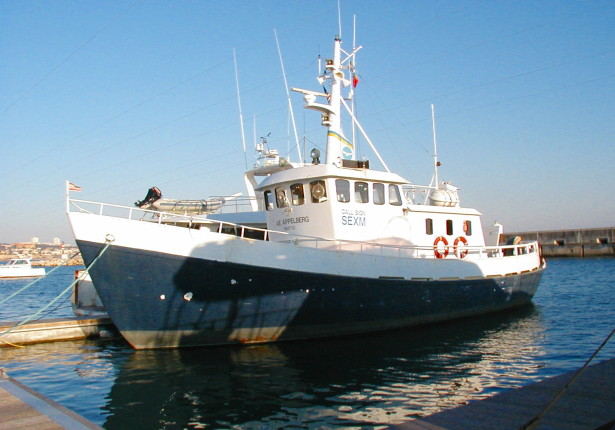
My European Icebreaker Adventure helping to Deliver the A.E. Appelberg a 62 foot former Swedish Coast Guard Auxiliary Icebreaker patrol boat from Stockholm Sweden to Lisbon Portugal.

In the marina at Cascais outside Lisbon Portugal


Continue reading

Posted in Sailing Trip Notes | Tagged , | 3 Comments

Correcting Compass Error

Or how to tell what direction to point the boat or which way is home.

“Correcting” is converting a magnetic (M) direction to true (T). “Uncorrecting” is converting from true to a magnetic direction. “True” direction is relative to true north (north pole).

Variation is the failure of the compass to point to true north (90 Degrees North), this difference is due to the Magnetic North Pole being located in Canada. Variation is read from the compass rose on the chart. Variation is the same for all boats in the same area. Variation is the same for all directions in the same area.

Deviation is the failure of the compass to point to magnetic north due to local magnetic fields on a vessel.  These fields may be caused by the engine, instruments or other electronic equipment, power wiring, tools or any other magnetic objects.  Deviation is specific to an individual boat. Deviation changes with the boats heading. Deviation is read from the Deviation Table on the boat.

Continue reading

Posted in Navigation, Safety Thoughts, Sailing and Boating Skills | Tagged , , , , | 10 Comments

Boating Safety Handouts

Here are some of the Handouts I use for various Boating Safety Classes I teach.

Hypothermia (pdf): – Quick Hypothermia Overview Symptoms and Treatment, remember hypothermia is a year around concern in Puget Sound, Lake Washington, Lake Union and the Seattle area.

Distress Signals (pdf): Distress Signal Overview.

Overboard Recovery (pdf): An overview of recovery methods.

VHF Radio (pdf): An overview of Marine VHF usage.

Important Seattle Area Boating Information (pdf): Includes Lake Washington, Lake Union and Speed Zones (2 pages)

Marlinespike Seamanship (PDF 7.5MB): Handout of the PowerPoint presentation used for the Coast Guard Auxiliary Crew Class, includes a few bonus knots.

– cm –

Posted in Sailing and Boating Skills | Tagged | 1 Comment

Quick Overview of Marine Charts

CHARTS

A chart is a map that shows a view of the ocean, lake, river or harbor and the shores associated with them.

The chart includes information on water depth (depth can be in feet, meters or fathoms), overhead clearances, aids to navigation (ATONS or buoys, lights etc.) shore profile, type of bottom, and other information for safe navigation.

Continue reading

Posted in Navigation, Sailing and Boating Skills | Tagged , , , | 2 Comments

Navigation Help

Captain Linda Lewis has a nice PowerPoint presentation that shows you how to plan a course to steer your boat when you need to compensate for current in the water.

Captain Linda Lewis is a senior instructor with the Coast Guard Auxiliary, she has 40 years of boating experience, University of Washington  Associate Professor Emeritus, is a popular speaker on marine navigation issues and writes regularly for boating magazines.

Planning your course to compensate for currents:

Posted in Navigation, Sailing and Boating Skills | Tagged | Leave a comment