VHF and Cell Phone questions we are ask all the time about VHF vs. your Cell Phone

Also see VHF Marine Radio Tips for more information on using your VHF Radio as well as Procedure Words (PROWORDS) and The Phonetic Alphabet.  The VHF Marine Radio Tips is also available in a two page printer friendly PDF file you can print and put on your boat.

captboatsafe's avatarBoatSafe Blog

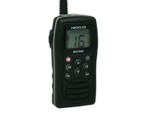
VHF RadioVHF Handheld radioThe Coast Guard does not advocate cell phones as a substitute for the regular maritime radio distress and safety systems recognized by the Federal Communications Commission and the International Radio Regulations — particularly VHF maritime radio. However, cell phones can have a place on board as an added measure of safety.

CELL PHONE LIMITATIONS IN AN EMERGENCY

Cell phones generally cannot provide ship to ship safety communications or communications with rescue vessels. If you make a distress call on a cell phone, only the one party you call will be able to hear you.

Most cell phones are designed for a land-based service. Their coverage offshore is limited, and may change without notice. Most everyone has experienced communications out to about 25 miles at times. Yet at other times they could not get through to a land based phone inside of 10 miles from shore. This might well create a…

View original post 350 more words

Posted in Boating Safety | Leave a comment

How to Tie Your Boat to a Dock that has a Bull Rail – Part 2

How-to-Tie-Your Boat-to-a-Bull-Rail–Part-2

A quick and easy way to tie your boat to a Bull Rail

This is a quick and easy way to tie a boat to a dock that has a Bull Rail.  This was passed on last week by a friend.

Some docks only have a Bull Rail so being able to properly and safely tie a boat to a  dock that has  a Bull Rail is an important skill to have.

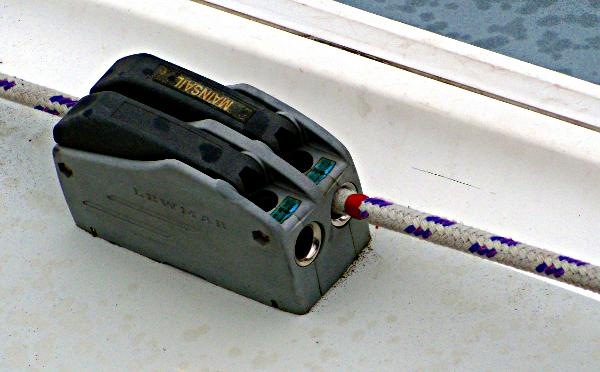
This method uses a loop of the dock line passed around the Bull Rail and back to a cleat on the boat.  This  quick release method lets the crew stay on the boat when they release the boat from the Bull Rail.

Continue reading

Posted in Boating Safety, Sailing and Boating Skills | Tagged , , , , , , | 3 Comments

How to Tie Your Boat to a Dock that has a Bull Rail – Part 1

How to Tie Your Boat to a Bull Rail

Tying a boat to a Bull Rail

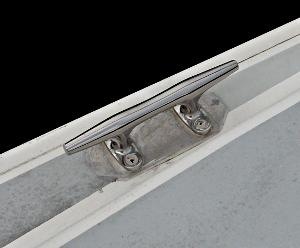
Tying a boat to  the Bull Rail on a dock is a commonly required docking skill that is often done the hard way.   Many docks don’t have cleats,  the cleats are not in a convenient location or a cleat might already be full.

Not being able to quickly tie a boat to a dock that has a Bull Rail  can put your crew at risk for injury as they struggle with the dock lines.   If your crew has to struggle to get a line undone when you leave the dock your boat or crew can also be at risk for damage or injury.

Here are a few tips and tricks to make tying your boat to a dock that has a Bull Rail safer and easier.

Continue reading

Posted in Boating Safety, Sailing and Boating Skills | Tagged , , , , , | 5 Comments

The Esquire Magazine Interview

Esquire-Cover-400In January of this year I received the following message from Taylor Adams at  Esquire Magazine.

Message: Hello, I’m one of the people at Esquire magazine responsible for the research that goes into our Big Black Book supplement, which this upcoming summer will have a feature on boating etiquette for the uninitiated as well as another concerning hosting for vessel owners. I’ve very much enjoyed the tone and quality of the information on this site, especially in the Boating Etiquette section, and I was wondering if you’d be available to speak with me as an expert on these issues due to your boating experience

Continue reading

Posted in Boating Safety, Safety Thoughts | 2 Comments

Marking Your Halyards

Mikes Quick Rope Whipping on a Halyard

Using Quick Rope Whipping to mark a halyard for quick and easy adjusting.

Many people put adjusting marks on  their halyards or other control lines to help with sail trim by making it quick and easy to repeat settings they have found to work with  given conditions in the past.    A big black magic marker is a common method to apply the marks.  The black mark looks tacky and fade after a while making it difficult to see where to adjust the halyard or line.  If a line stretches or a different sail  used the adjusting marks may be in the  wrong position.   I use my Quick Rope Whipping to mark my halyards.  The whipping only takes a few minutes to apply and different colors may be used for different sails, and the Rope Whipping can be moved if the setting changes.

Continue reading

Posted in Boat Maintenance, Boating Safety | Tagged , | Leave a comment

Personal Boating Safety Equipment

Personal Boating Safety Equipment

Personal Boating Safety Equipment

What safety equipment should I have on me when I am boating or what safety equipment should I add to my lifejacket is a common question  ask at boating safety events.

Here is the safety equipment that I and other people I know use.  I will start with the required equipment when a U.S. Coast Guard Auxiliary member is out on patrol and then cover equipment that is commonly added to the minimum equipment list.

Lifejacket: Orange lifejacket with SOLAS reflective tape.  Ok, I know, getting your crew into bright orange lifejackets with big pieces of silver reflective tape on it is a bit of a hard sell for most recreational boaters.  However many inflatable lifejackets have an outer cover that is more stylish and the orange bladder only shows on inflation.  For recreation boaters having your crew wear a lifejacket no matter what color it is is good.  In Washington State children 12 years old and younger must wear a USCG approved lifejacket at all times when underway in a vessel under 19 feet long unless they are in a fully enclosed area.  Many parents have their children put on a lifejacket as soon as they get to the marina and go onto the dock and boat.  Many people also put their pets in lifejackets.

Continue reading

Posted in Boating Safety, Sailing and Boating Skills | Tagged , | 4 Comments

Re-Bedding Deck Hardware

Bedding Deck Hardware

Bedding Deck Hardware

Bedding deck hardware is something that all boat owners need to do sooner or later.  Either because of leaks, new hardware or maintenance  of existing hardware.  Recently I found an article that shows how the author and several boat manufactures use Butyl Tape for bedding deck fittings.

First I would like to cover some common errors I and others have found on boats and offer a few tips that we have found that help make a better and longer lasting bedding job.

Continue reading

Posted in Boat Maintenance | Tagged , | 4 Comments

Mountaineers Sailing Crew Class Resources – Spring 2012

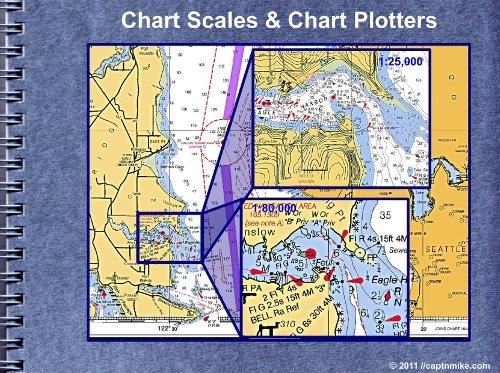
Crew-Resources-HeaderHere are a few links to help the students in the Mountaineers Spring Sailing Crew Class that I helped teach.

These links are also good starting point for any recreational boater.

Links are provided to Nav. Problems, handouts,  additional information on charts,  PowerPoint presentations and additional practice problems and resources for recreational boaters.

Continue reading

Posted in Boating Safety, Mountaineers Sailing, Sailing and Boating Skills | Tagged , | 4 Comments